
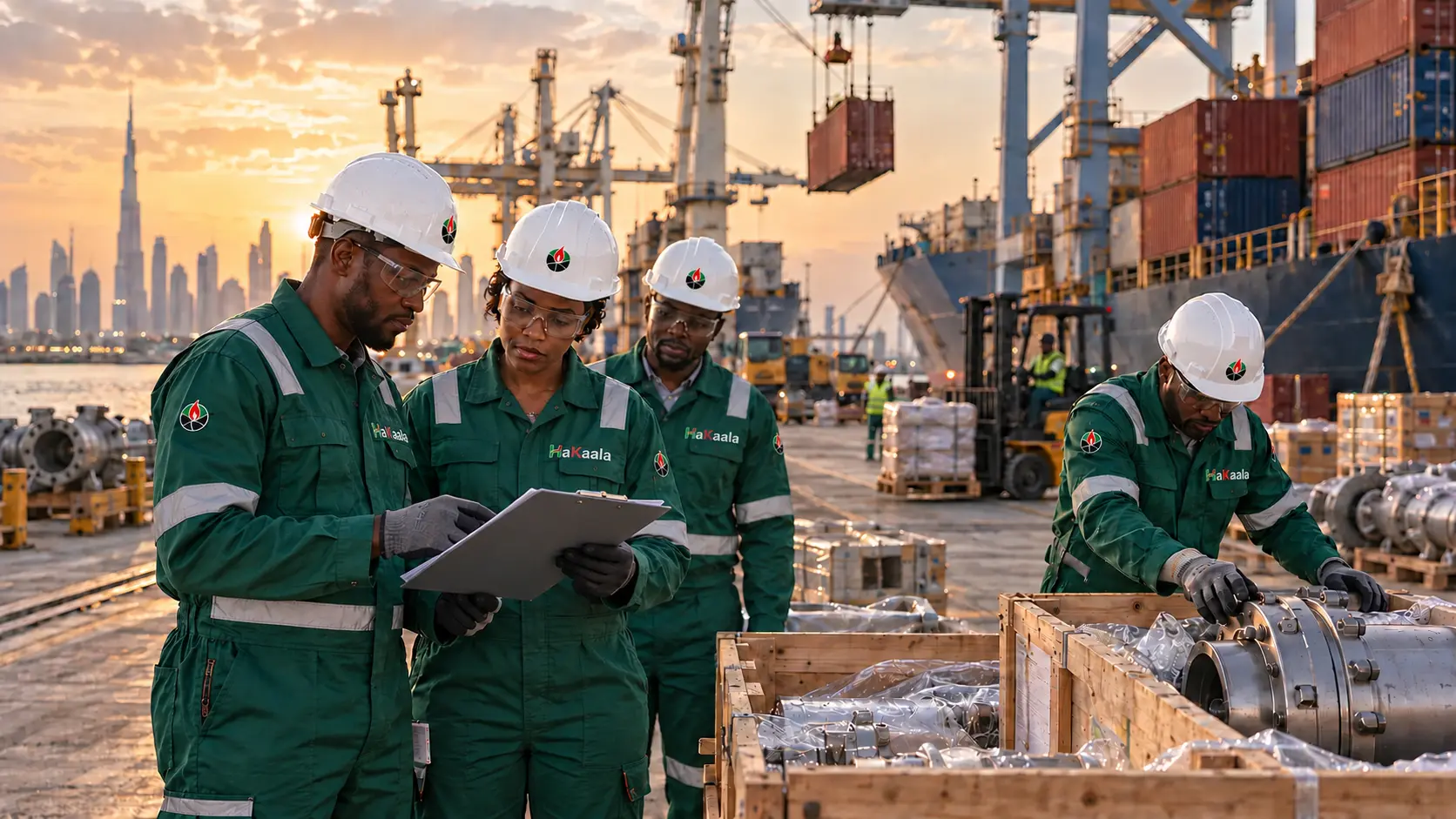
CUTTING LEAD TIMES ON LONG-LEAD SPARES: SOURCING THROUGH DUBAI
Long-lead spares create risk long before a shipment slips. Delays often start with fragmented responsibilities between sourcing, inspection, freight and customs. A cleaner supply-chain model gives operators more certainty on critical equipment.
WHY LONG-LEAD ITEMS SLOW PROJECTS
Complex items usually involve OEM confirmation, export coordination, quality documentation and route planning. When each step is owned separately, visibility drops and lead times stretch.
Regional sourcing through Dubai can simplify supplier access and freight options while giving African projects a faster coordination point.
- Consolidate OEM, expediting and freight under one reporting line.
- Use milestone tracking for manufacture, inspection and dispatch.
- Confirm customs documentation early for Angola-bound cargo.
BUILD A SINGLE DELIVERY CHAIN
The most reliable model joins procurement, warehousing, freight and destination handling into one managed chain. This reduces handoff friction and allows project teams to see where the true bottleneck sits.
It also improves communication with site teams, who can plan installation windows more accurately when delivery confidence is high.
FROM PORT TO POINT OF USE
The final measure of procurement is not the purchase order; it is equipment in the right condition at the right workfront. Final-mile planning, inland transport and site receiving deserve the same attention as overseas sourcing.
When these disciplines are connected, long-lead spares stop being a surprise and become a manageable delivery stream.


Lead time is rarely a supplier problem alone. It is usually a coordination problem spread across the chain.